
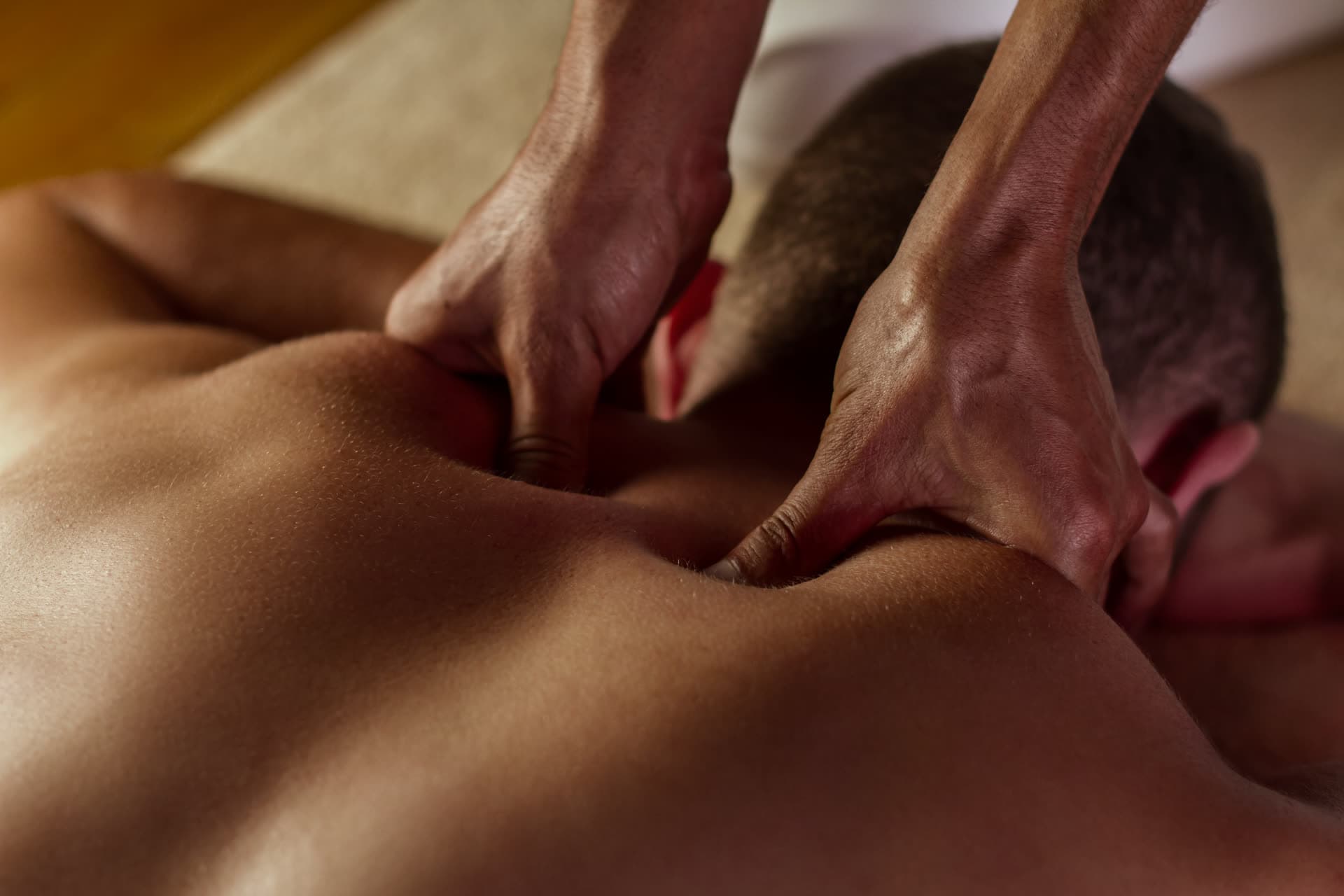
Deep tissue massage
Deep Tissue Massage, Delivered in San Diego
Slow, specific, firm work for the tension that a relaxation massage doesn't touch.
Deep tissue massage uses slow strokes and sustained, firm pressure to reach the deeper layers of muscle and connective tissue. It’s built for chronic tension — the desk-job shoulders, stubborn low-back tightness, and old knots that gentler massage doesn’t resolve — and we bring it to your home anywhere in San Diego.
Start with the problem
Where does it hurt?
Most deep tissue bookings start with a specific complaint, not a wish to relax. These are the four we see most, and the patterns behind them:
Neck & shoulders
Desk work, phone posture, stress-clenching — the upper traps and levator scapulae take the hit.
Low back & hips
Long sitting shortens hip flexors and overworks the low back; glutes and QL respond well to slow, sustained pressure.
Forearms & hands
Keyboards, climbing, trades work. Often overlooked, and a frequent source of elbow and wrist complaints.
Calves & feet
Runners, hikers, and anyone on their feet all day. Deep work here changes how the whole leg feels.
Recognize yourself? Note your trouble spots on the booking form and your therapist will plan the session around them. For the mechanics of why knots form and how pressure releases them, read our guide to trigger points.
How deep tissue differs from Swedish
| Deep tissue | Swedish | |
|---|---|---|
| Goal | Release specific chronic tension | Full-body relaxation |
| Pace | Slow, sustained, focused | Flowing, rhythmic |
| Pressure | Firm to deep, always adjustable | Light to medium |
| Afterward | Possible next-day soreness, then relief | Immediate calm, no soreness |
Want the calm without the intensity? Book a Swedish massage instead — or blend the two. Most sessions land somewhere in between, and all ten services are compared on our services page.
Expectations
What a good deep tissue session feels like
The old “no pain, no gain” idea is outdated. Effective deep tissue work sits at the edge of intensity you can still breathe through — often described as “good pain” or a deep, satisfying ache. If you find yourself clenching your jaw or holding your breath, the pressure is too much, and saying so makes the massage work better, not worse.
Expect your therapist to spend real time on fewer areas rather than rushing the whole body. Deep layers release on their own schedule: the tissue is warmed first, then worked slowly with forearms, elbows, and focused fingertip pressure. Some mild soreness the next day is normal; lasting relief typically shows up as the soreness fades.
Because you’re already home, you can do the single best thing for the work to hold: nothing. No drive, no errands — just water, maybe a shower, and rest. It’s a real advantage of mobile deep tissue over a clinic visit, and one reason chronic-pain clients in particular go mobile. More on that in deep tissue massage for chronic pain.
A few aftercare habits make the difference between a session that feels good and one that changes your week: drink more water than usual for the rest of the day, take a short easy walk rather than collapsing into a chair, and use heat — a shower or heating pad — on any area that feels tender the next morning. Skip intense training for a day; the tissue you just spent an hour releasing deserves at least that long before you load it again.
Pricing
Same flat rates, deeper work
Deep tissue costs the same as every other table session — no upcharge for firmer work.
- 60 minutes — one or two focus areas$129
- 90 minutes — focus areas plus full-body integration$179
- 120 minutes — thorough head-to-toe deep work$229
Cupping pairs especially well with deep tissue (+$20); CBD lotion is +$10. Travel: free in Point Loma & Ocean Beach, $20 in the city, $40 county-wide. See the pricing page for everything.
Questions
Deep tissue FAQ
Ready to book?
We bring the table, linens, and calm — you keep the couch afterward.