
Performance
Marathon Recovery Massage: Timing It Right in San Diego
Massage belongs in a marathon build — but the type of work has to match the calendar. The pre-race cutoff, the post-race waiting window, and the difference between flush and deep work.
Published 2/22/2026· By Kristian Fennessy, CMT
The timing rule, up front
If you take one thing from this post: schedule no new deep tissue work inside the final five days before your race, and no aggressive work in the first 24 to 48 hours after it. Massage absolutely belongs in a marathon build — San Diego's spring and early-summer race calendar keeps our table busy from late winter on — but the type of work has to match where you are on the calendar, and getting that wrong can cost you on race day.
Everything below is that one rule, expanded.
Flush work and deep work are different tools
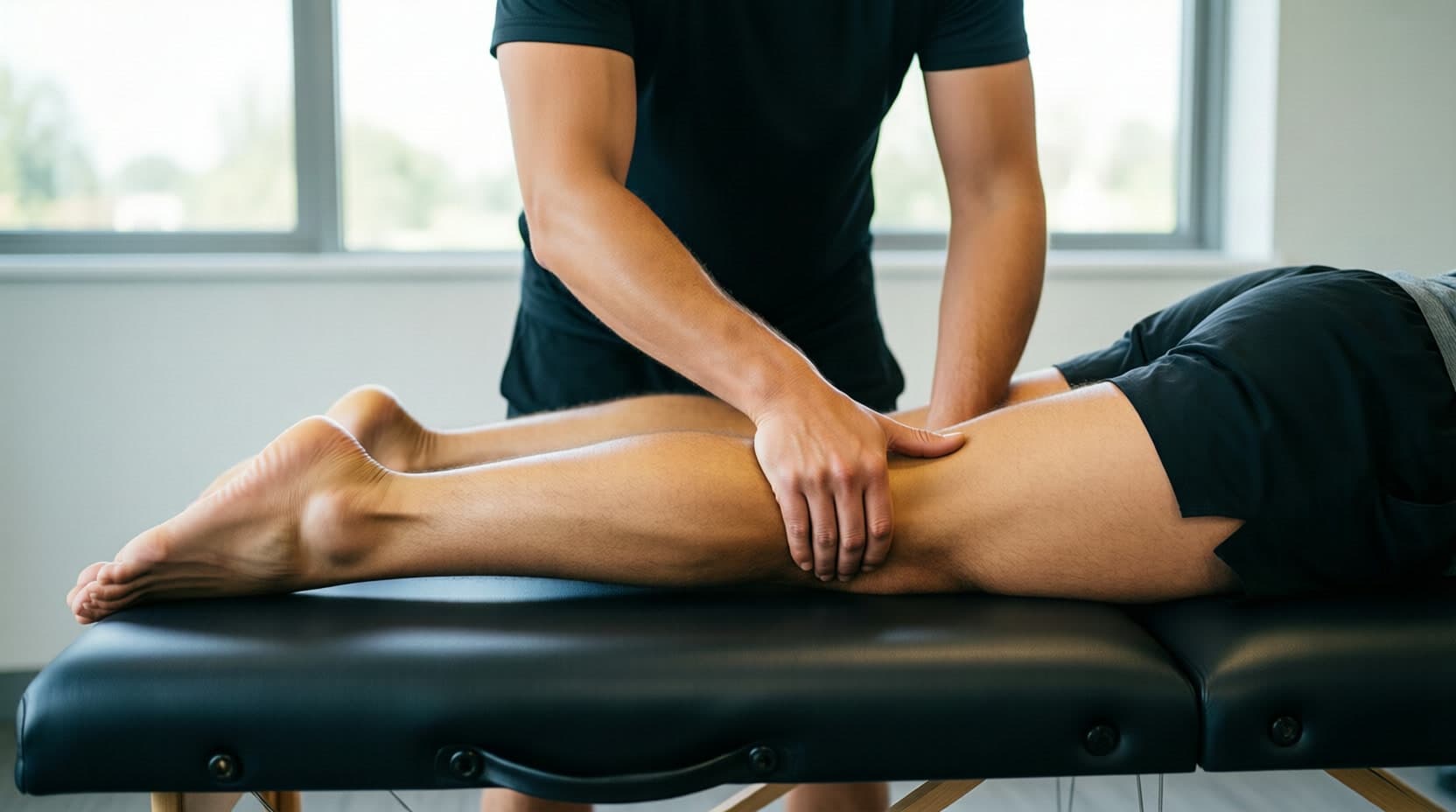
A flush session is lighter, rhythmic, and circulation-oriented: long strokes moving fluid through the legs, moderate pressure, the whole thing closer to a rising tide than an excavation. You get off the table feeling lighter, and there is no next-day soreness. This is the work that belongs near a race.
Deep work is the opposite instrument — slow, specific pressure into adhesions and stubborn spots, the kind of session described on our sports massage page. It is productive, and it is also a physical stress of its own: treated tissue can feel tender for a day or two, and your stride can feel subtly different while things settle. That aftermath is precisely why timing matters. The difference between productive intensity and too much is worth understanding before any deep session; our pressure guide walks through it.
The two weeks before your race
Ten to fourteen days out is the last sensible window for real deep work. If your build has left known trouble spots — calves that have been threatening all cycle, a cranky hip flexor — this is when to address them, with enough runway for the tissue to settle and the benefit to show up.
Inside race week, downgrade to flush work or skip massage entirely. A light session two to four days out can leave your legs feeling fresh, with one firm condition: nothing new. Not a new therapist, not a new modality, not more pressure than you've had before. Race week is for rehearsed inputs only — the same logic that says don't try new shoes or new gels on race day.
The day before, we generally advise skipping the table altogether. Put your feet up instead.
After the finish line
The urge to book a massage for the same afternoon is understandable and worth resisting. In the first 24 to 48 hours, your leg muscles are inflamed, micro-damaged, and often dehydrated — and that inflammation is not a malfunction, it is the repair process running. Pressing deeply into tissue in that state adds insult, not recovery. Sleep, food, water, and gentle walking do more for you in this window than any table can.
From 24 to 48 hours on, once you've rehydrated and slept, a light flush session earns its place — legs that feel like concrete on Monday tend to feel like legs again after one.
Days three through ten are the window most runners underuse. Soreness has receded, and now deep work pays: every marathon exposes something specific — a calf, a glute that stopped firing late, the outside of one hip — and this is when we can actually work on it rather than around it. Runners who book one session in this window consistently start their next training block in better shape than those who let the race's damage quietly become the new baseline.
The mobile advantage, two days after a marathon
There is a special comedy to driving across town for a recovery massage when descending your own staircase is a negotiation. This is the scenario mobile massage was built for: we bring the table, linens, and everything else to your home, your hotel near the course, or your vacation rental — anywhere in San Diego County. Out-of-town racers use this constantly; a session in your room the evening after the race, then nothing but the walk to bed.
For runners training here year-round, the same logic applies at smaller scale to the whole build — regular work through heavy mileage blocks is covered in our post on sports massage for performance and injury prevention.
Booking around a race
Race weekends cluster demand — everyone who ran wants the same two or three recovery days. If your race matters to you, book both slots in advance: the light pre-race session and the post-race session in that day-three-to-ten window. Tell us the race date and your goal when you book, and we'll match the work to the phase you're in. With hours from 7am to 10pm, even a dawn-patrol training schedule fits.
One last note for the half-marathon and 10K crowd: everything above scales down rather than disappearing. A half still earns its 24-hour buffer after the finish, and race week is still the wrong time to try deep work for the first time. Shorter races do less damage, but the tissue does not know it was "only" thirteen miles.
Ready to book?
Book your mobile massage onlineQuestions
Frequently asked
Keep reading
Related articles
Ready to book?
We bring the table, linens, and calm — you keep the couch afterward.