
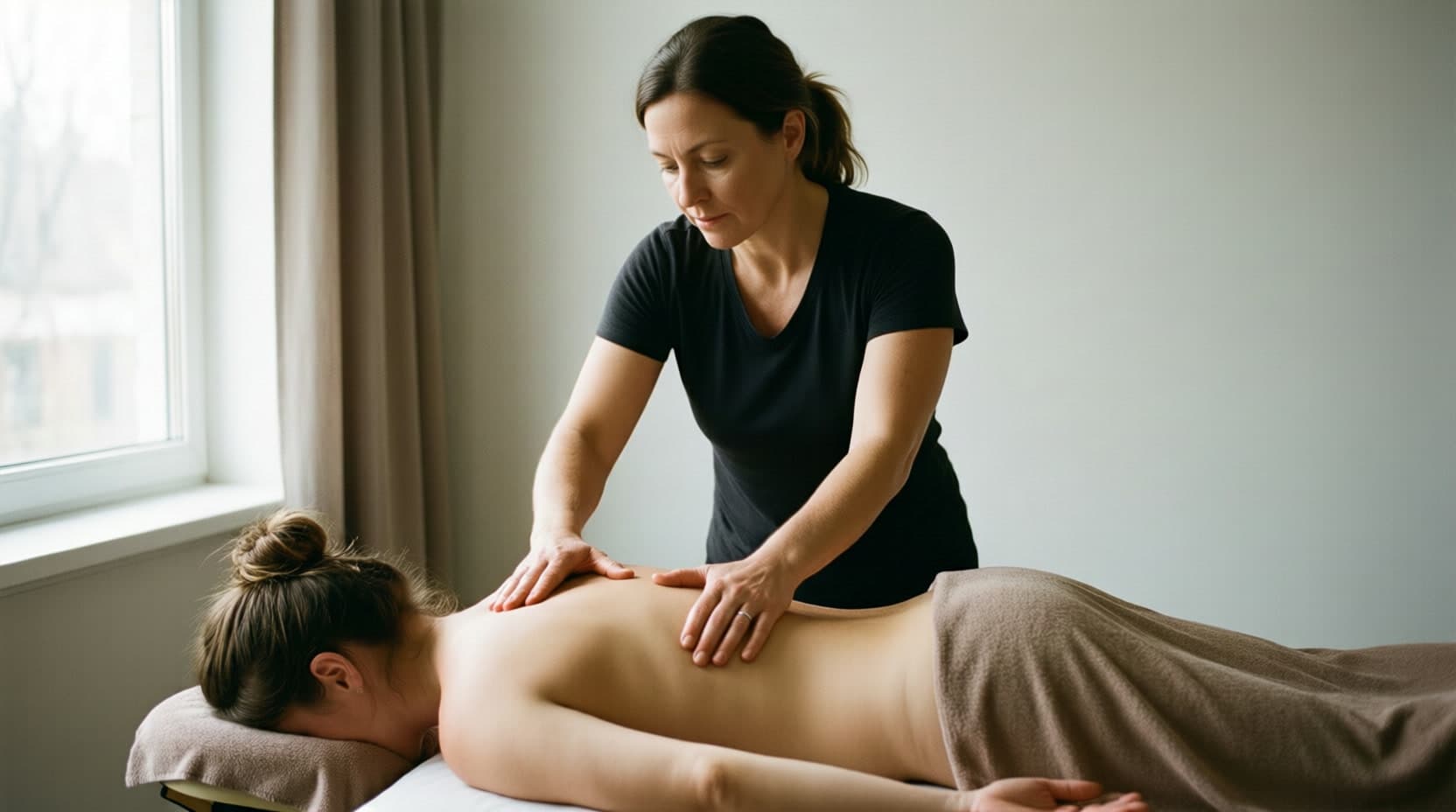
Myofascial release
Myofascial Release, at Home in San Diego
Slow, sustained work into the connective tissue — for the stiffness that regular massage doesn't quite reach.
Myofascial release is slow, sustained stretching and gliding pressure into the fascia — the connective tissue that wraps every muscle. Instead of kneading, your therapist engages the tissue and waits for it to soften, typically without oil. It suits chronic stiffness that keeps returning after regular massage, and we bring it to your home anywhere in San Diego County.
What it is
Waiting for tissue to release, not forcing it
Fascia is the continuous web of connective tissue under your skin — it wraps muscles, links regions, and can feel bound or restricted after years of the same postures. Myofascial technique works this layer directly: the therapist sinks in with a broad surface, usually a forearm or soft fist, takes up the slack, and holds a slow stretch until the tissue lets go under the hands. There’s little or no oil, because the technique needs traction rather than glide, and the pace is unhurried by design. A single hold can last a minute or more.
A word on the science, plainly: fascia research is young. The felt experience is remarkably consistent — clients describe a slow, melting release during the work and a looseness afterward that tends to outlast what they get from faster techniques — but the mechanisms behind that experience are still debated among researchers. We’d rather tell you that than borrow certainty the field doesn’t have. Myofascial release is a wellness service that may help you move and feel better; it isn’t a treatment or a cure for any condition.
The sensation takes a session to learn. If you’re used to judging massage by pressure, our pressure guide explains where slow, sustained work sits on that spectrum — intense in duration rather than force.
Myofascial release vs. deep tissue
The two are cousins, and most of our sessions blend them. The difference is how each one asks tissue to change:
| Myofascial release | Deep tissue | |
|---|---|---|
| Target | The fascial web across whole regions | Specific muscles and their knots |
| Pace | Very slow; holds of a minute or more | Slow, but steadily working strokes |
| Contact | Broad — forearm, soft fist, spread hands | Focused — fingertips, knuckles, elbow |
| Lubricant | None or minimal; needs traction | Oil or lotion for working strokes |
| Feels like | A deep stretch that slowly melts | Strong, satisfying focused pressure |
Prefer the focused, specific version of firm work? That’s deep tissue massage — and if a stubborn spot is what brought you here, our explainer on what a muscle knot actually is covers why those spots form and keep coming back.
Good fits
Who tends to book myofascial work
Tension that keeps coming back
You get regular massage, feel great for three days, and the same stiffness returns. Sustained fascial work often reaches the layer that repeated kneading doesn't.
Desk posture
Years of sitting shorten and stiffen the fascia across the chest, hips, and forearms — broad, slow stretch suits that pattern better than spot pressure alone.
Old injuries
Long-healed sprains and surgeries can leave tissue that feels bound or restricted. Gentle sustained work may help restore a sense of glide around those areas.
Between pressures
Deep tissue feels like too much, Swedish like too little. Myofascial release is intense in duration rather than force — strong sensation without the bracing.
Not sure which camp you’re in? Book a session, describe the stiffness on the form, and your therapist will blend techniques based on how your tissue actually responds — that read happens in the first ten minutes on the table.
Pricing
A standard session, at standard rates
Myofascial release books as a regular table session — same flat rates, no specialty upcharge. Many clients ask for it blended with deep tissue work, which costs nothing extra either.
- 60 minutes — one region worked thoroughly$129
- 90 minutes — recommended; sustained holds take time$179
- 120 minutes — full-body fascial work plus focus areas$229
Travel: free in Point Loma & Ocean Beach, $20 in the city of San Diego, $40 elsewhere in the county. Sessions run 7am–10pm daily at your home, hotel, or office. Full details on the pricing page.
Questions
Myofascial release FAQ
Ready to book?
We bring the table, linens, and calm — you keep the couch afterward.